

Back
Why Your Support Team Is Losing Productivity (And How to Fix It)

Ajith
- August 13, 2026
8 min read

Introduction
Every customer support leader wants the same outcome: faster resolutions, happier customers, and more productive agents. Yet many teams struggle to achieve these goals—not because they lack skilled agents, but because their daily workflows are filled with small inefficiencies that quietly reduce productivity.
A support agent's day isn't spent entirely solving customer issues. They switch between CRM systems, billing platforms, internal communication tools, spreadsheets, calendars, and multiple browser tabs just to gather the information needed for a single ticket. These repetitive tasks consume valuable time that could be spent delivering exceptional customer service.
According to industry research, support professionals spend a significant portion of their workday on repetitive administrative activities rather than direct customer interactions. As customer expectations continue to rise, businesses can no longer afford inefficient support workflows. Improving support team productivity isn't about asking agents to work harder—it's about giving them better systems and smarter workflows.
The Productivity Problem Isn't Your Team
When customer satisfaction drops or ticket resolution times increase, it's easy to assume the problem lies with agent performance.
In reality, the biggest productivity challenges often come from the systems and processes surrounding your support team.
Think about a typical customer request. Before responding, an agent may need to:
- Look up customer details in a CRM.
- Verify payment information.
- Review previous conversations.
- Download screenshots or documents.
- Contact another department for an update.
- Set a reminder to follow up later.
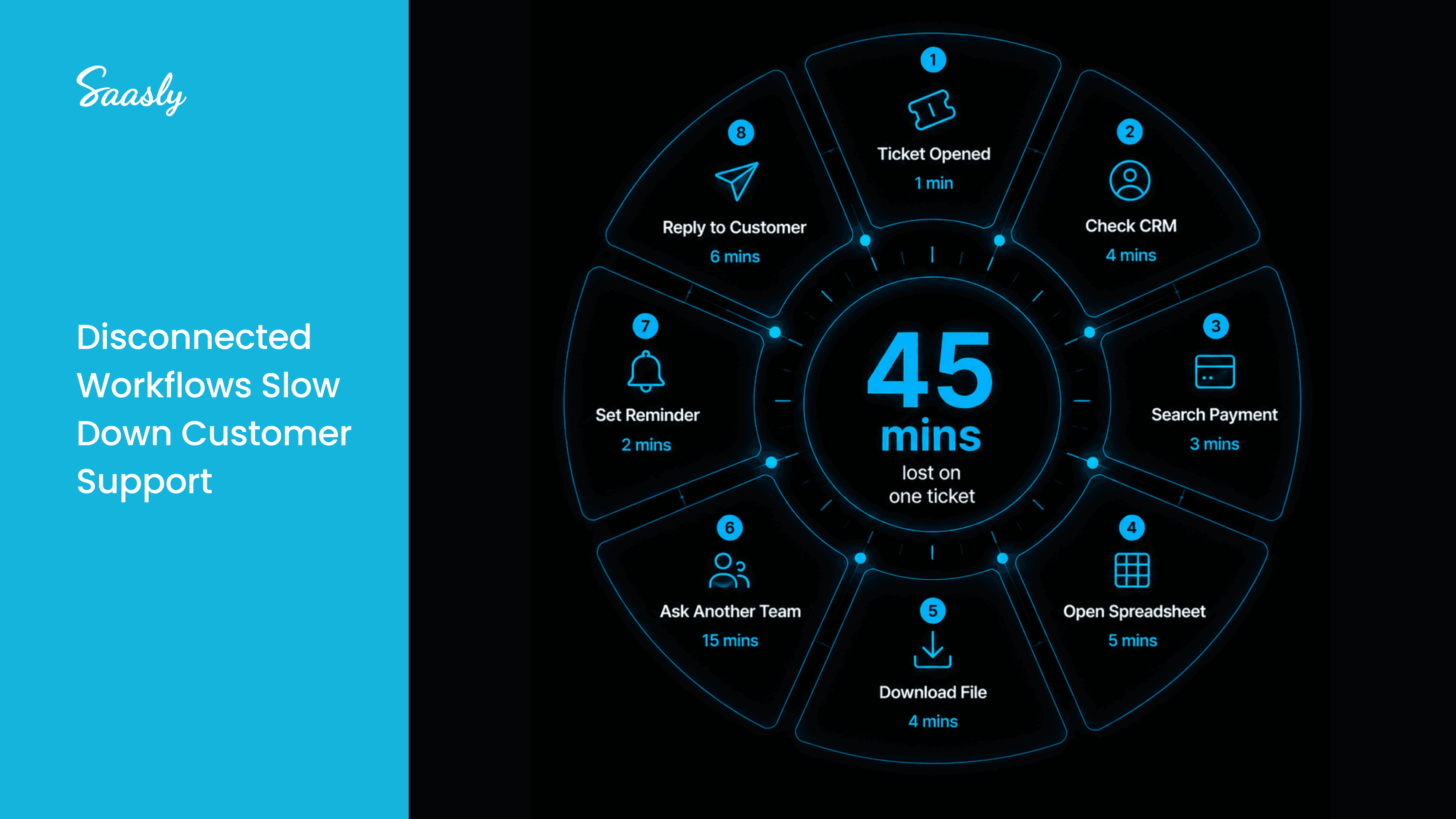
Individually, each task takes only a few minutes. Across hundreds of tickets each week, those minutes add up to hours of lost productivity.
As support operations grow, manual processes become harder to manage consistently. The result is slower response times, increased workload, and frustrated agents.
Five Common Productivity Killers in Customer Support
1. Constant Context Switching
Support agents rarely work inside a single application.
Instead, they move between helpdesks, CRMs, billing systems, project management tools, email, chat applications, and spreadsheets throughout the day.
Every time an agent leaves the helpdesk to find customer information, it interrupts their focus. While switching between applications may seem harmless, it creates a continuous cycle of interruptions that slows ticket resolution and increases mental fatigue.
The more disconnected your business systems are, the more time agents spend searching instead of supporting customers.
2. Repetitive Manual Tasks
Many support activities still rely on manual effort.
Agents create follow-up reminders, organize attachments, update multiple systems, copy customer information, and perform routine administrative work that adds little value to the customer experience.
These tasks are essential, but they don't require human creativity or expertise.
When repetitive work dominates the day, agents have less time for complex conversations that genuinely improve customer satisfaction.
3. Missing Customer Context
Customers expect support agents to understand their history without asking the same questions repeatedly.
However, when customer information is scattered across different systems, agents often spend several minutes gathering the context they need before they can even begin solving the problem.
This not only increases response times but also creates a frustrating experience for customers who expect personalized service.
Keeping customer information accessible within the support workflow helps agents make faster, more informed decisions.
4. Poor Collaboration Between Teams
Customer support rarely works in isolation.
Agents frequently depend on engineering, finance, sales, or operations teams to resolve customer issues.
Without efficient collaboration, tickets remain open while agents wait for updates through emails, chat messages, or meetings.
The longer information takes to reach the support team, the longer customers wait for answers.
5. Growing Ticket Volumes
As businesses expand, customer inquiries naturally increase.
Unfortunately, many organizations continue using the same manual workflows they relied on when handling far fewer tickets.
What once worked for a small support team becomes increasingly difficult to manage at scale. Agents spend more time organizing work than resolving customer issues, leading to longer queues and reduced efficiency.
The Hidden Cost of Low Support Team Productivity
When support workflows are inefficient, the impact goes far beyond slower ticket resolution. Small inefficiencies accumulate over time, affecting both the customer experience and business performance.
Some of the most common consequences include:
- Longer resolution times: Agents spend more time searching for information and completing manual tasks than solving customer issues.
- Lower customer satisfaction (CSAT): Delayed responses and repeated requests for information frustrate customers.
- Agent burnout: Constant context switching and repetitive work reduce morale and increase stress.
- Higher operational costs: As productivity declines, businesses often respond by hiring more agents instead of improving workflows.
- Inconsistent customer experiences: Different agents follow different processes, making support less predictable and harder to scale.
The challenge isn't that support teams are working too little—it's that too much of their time is spent on work that doesn't directly help customers.
What High-Performing Support Teams Do Differently
Successful support organizations don't simply ask agents to work faster. Instead, they build workflows that remove unnecessary friction from everyday operations.
These teams focus on:
Keeping customer information in one place
Rather than switching between multiple platforms, agents can access the context they need without leaving their helpdesk. This reduces search time and enables faster, more informed responses.
Automating repetitive tasks
Routine activities such as reminders, recurring tickets, attachment handling, and follow-up actions are automated wherever possible. This allows agents to focus on conversations that require human judgment.
Standardizing support processes
Clear, consistent workflows help every team member follow the same best practices, improving both productivity and service quality.
Improving collaboration
When support, sales, engineering, and operations can share information more effectively, tickets move faster and customers receive updates sooner.
By reducing operational overhead, high-performing teams create more time for meaningful customer interactions.
How Marketplace Apps Help Improve Productivity
Most modern helpdesks offer a solid foundation, but every business has unique operational needs. As teams grow, they often require capabilities that go beyond the platform's native features.
This is where Marketplace apps play an important role.
Instead of replacing your existing helpdesk, Marketplace apps extend its functionality by solving specific operational challenges. Whether it's reducing repetitive tasks, improving visibility, or connecting business systems, these apps help support teams work more efficiently within the tools they already use.
For example, organizations may use Marketplace apps to:
- Connect CRM and customer data directly to support tickets.
- Organize and preview customer attachments more efficiently.
- Schedule reminders and recurring tasks without external tools.
- Improve collaboration with engineering or project management platforms.
- Automate routine workflows that would otherwise require manual effort.
The result is a more connected support environment where agents spend less time managing processes and more time helping customers.
How Saasly Helps Businesses Build Smarter Support Operations
At Saasly, we believe productivity isn't about adding more tools—it's about making your existing helpdesk work smarter.
Our Marketplace apps for Zendesk, Freshdesk, and Zoho Desk are designed to address common operational challenges that support teams face every day.
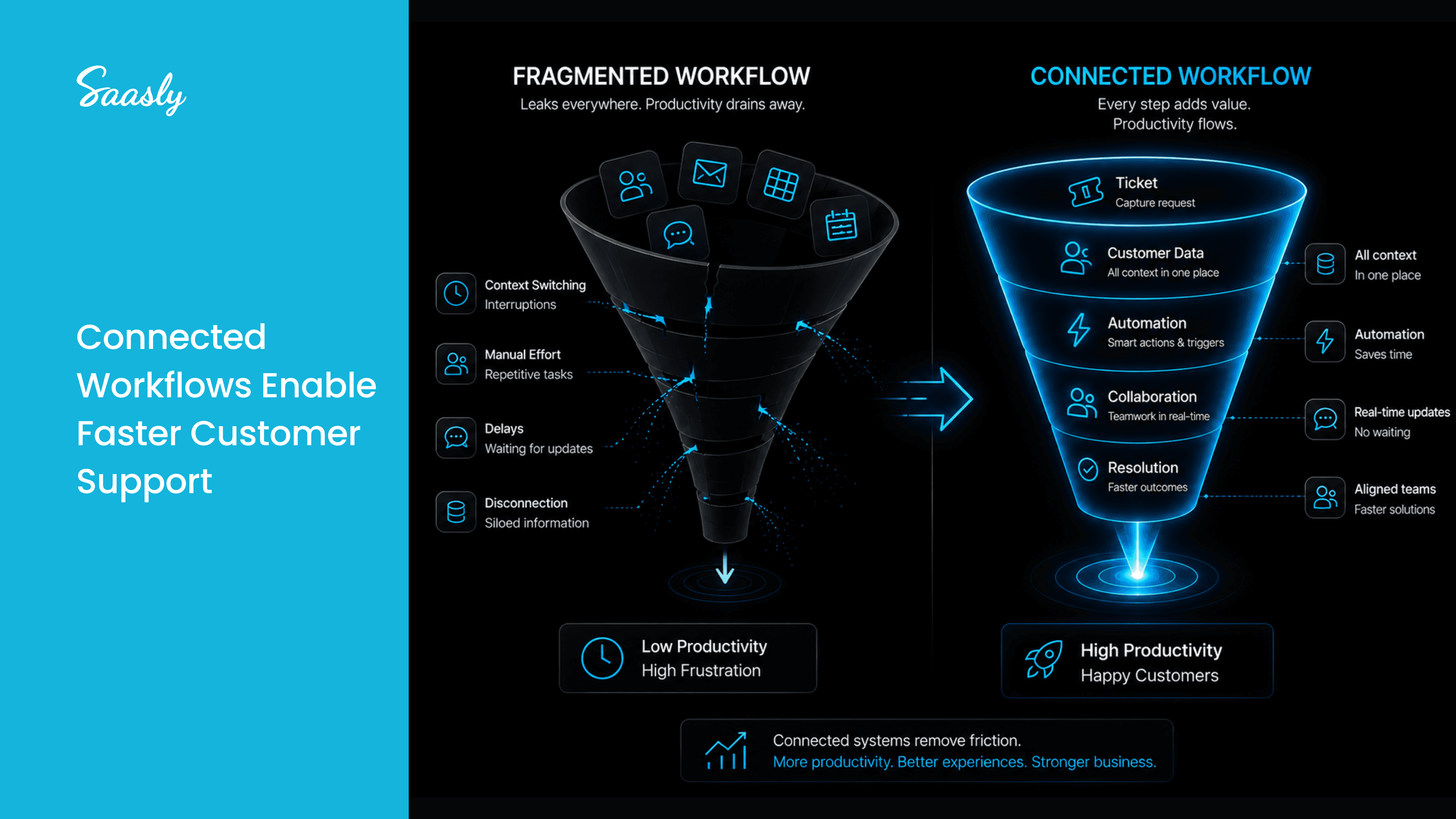
Instead of building custom integrations or relying on disconnected workflows, businesses can use ready-to-deploy solutions that fit naturally into their support processes.
Whether you need to:
- improve customer visibility,
- manage attachments more efficiently,
- automate recurring tasks,
- schedule follow-ups,
- connect CRM platforms,
- integrate project management tools,
- or streamline internal workflows,
Saasly provides Marketplace apps that help reduce manual work while improving agent productivity.
The goal isn't simply to add new features. It's to help your support team spend more time delivering exceptional customer experiences and less time navigating operational complexity.
Small Workflow Improvements Create Big Results
Productivity doesn't improve overnight through one major change.
Instead, it comes from removing dozens of small inefficiencies that agents encounter every day.
Saving just a few minutes on each ticket may seem insignificant, but across hundreds or thousands of customer interactions each month, those time savings translate into:
- Faster response times
- Improved customer satisfaction
- Better agent utilization
- Lower operational costs
- Greater consistency across the support team
Organizations that continuously optimize their workflows are better equipped to scale their support operations without sacrificing service quality.
Conclusion
If your support team feels constantly busy but struggles to keep up with growing customer expectations, the issue may not be the people—it may be the process.
Disconnected systems, repetitive manual work, and inefficient workflows quietly reduce productivity and make it harder for agents to deliver the level of service customers expect.
By simplifying workflows, improving access to customer information, and extending your helpdesk with the right Marketplace apps, you can eliminate many of these operational bottlenecks.
Improving support team productivity isn't about working harder. It's about creating an environment where agents can focus on solving problems instead of managing processes.
As customer support continues to evolve, businesses that invest in smarter workflows today will be better prepared to deliver faster, more consistent, and more personalized support tomorrow.
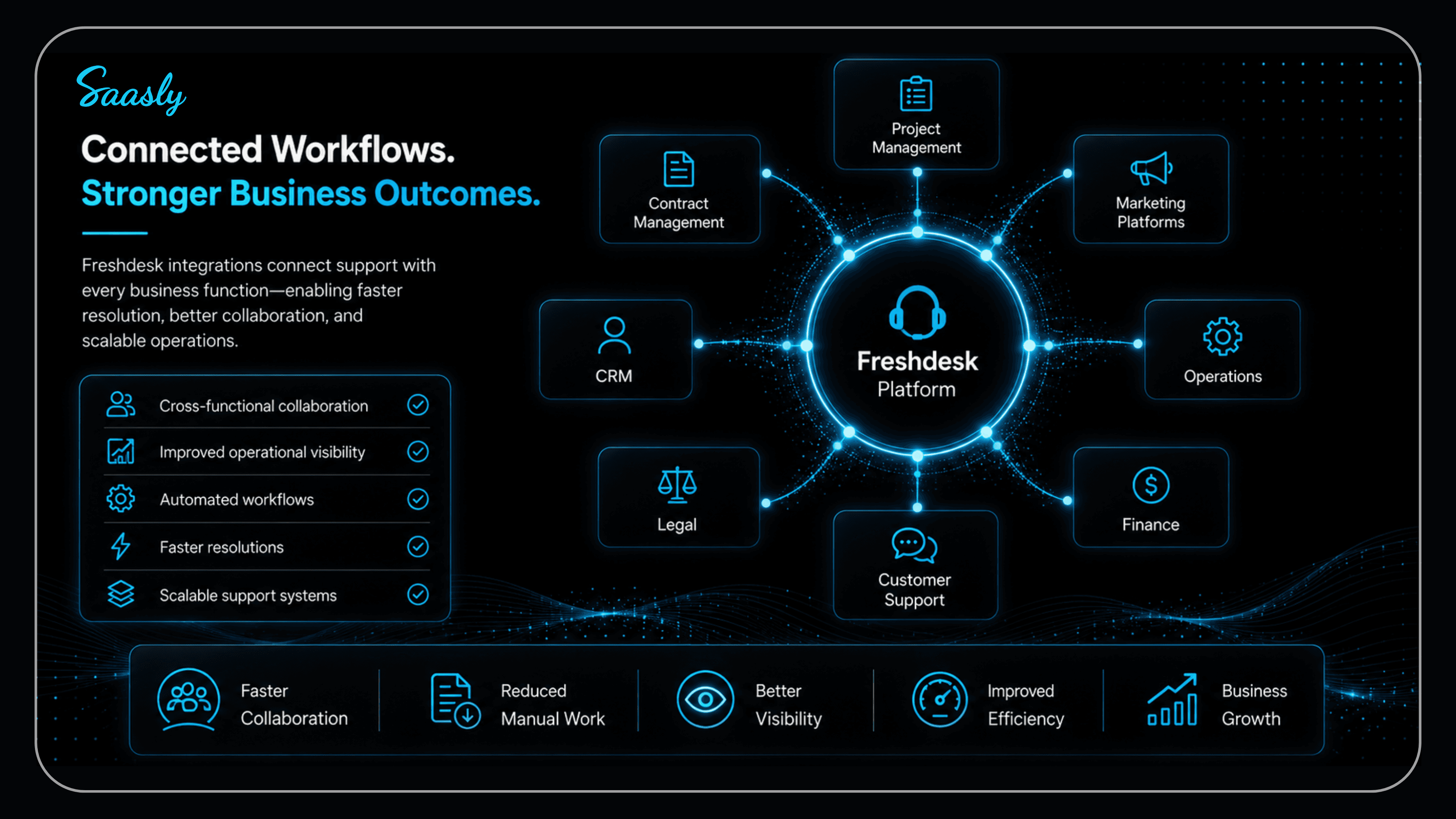
Explore Smarter Support Solutions with Saasly
Looking to eliminate repetitive tasks and improve your support operations?
Explore Saasly's Marketplace apps for Zendesk, Freshdesk, and Zoho Desk to discover practical solutions that help your team work more efficiently, reduce manual effort, and deliver better customer experiences.