
Back
The Rise of AI Voice: What It Means for the Next Generation of CPaaS

Karthikeyan R
- October 7, 2026
6 min read

Introduction
For years, CPaaS providers have helped businesses connect with customers through voice APIs. Businesses could make calls, route conversations, manage numbers, and build voice workflows without managing telecom infrastructure themselves.
Now, voice communication is entering another phase.
AI Voice is turning voice from a communication channel into an intelligent interaction layer.
Instead of simply connecting a customer to an agent, AI voice agents can understand conversations, respond naturally, and potentially trigger actions across business systems.
For CPaaS providers, this creates a new opportunity—and a new integration challenge.
From Voice APIs to AI Voice Agents
Traditional CPaaS voice follows a relatively simple model:
Application → Voice API → Phone Network → Customer
The CPaaS platform provides the infrastructure required to establish and manage communication.
AI Voice introduces another layer:
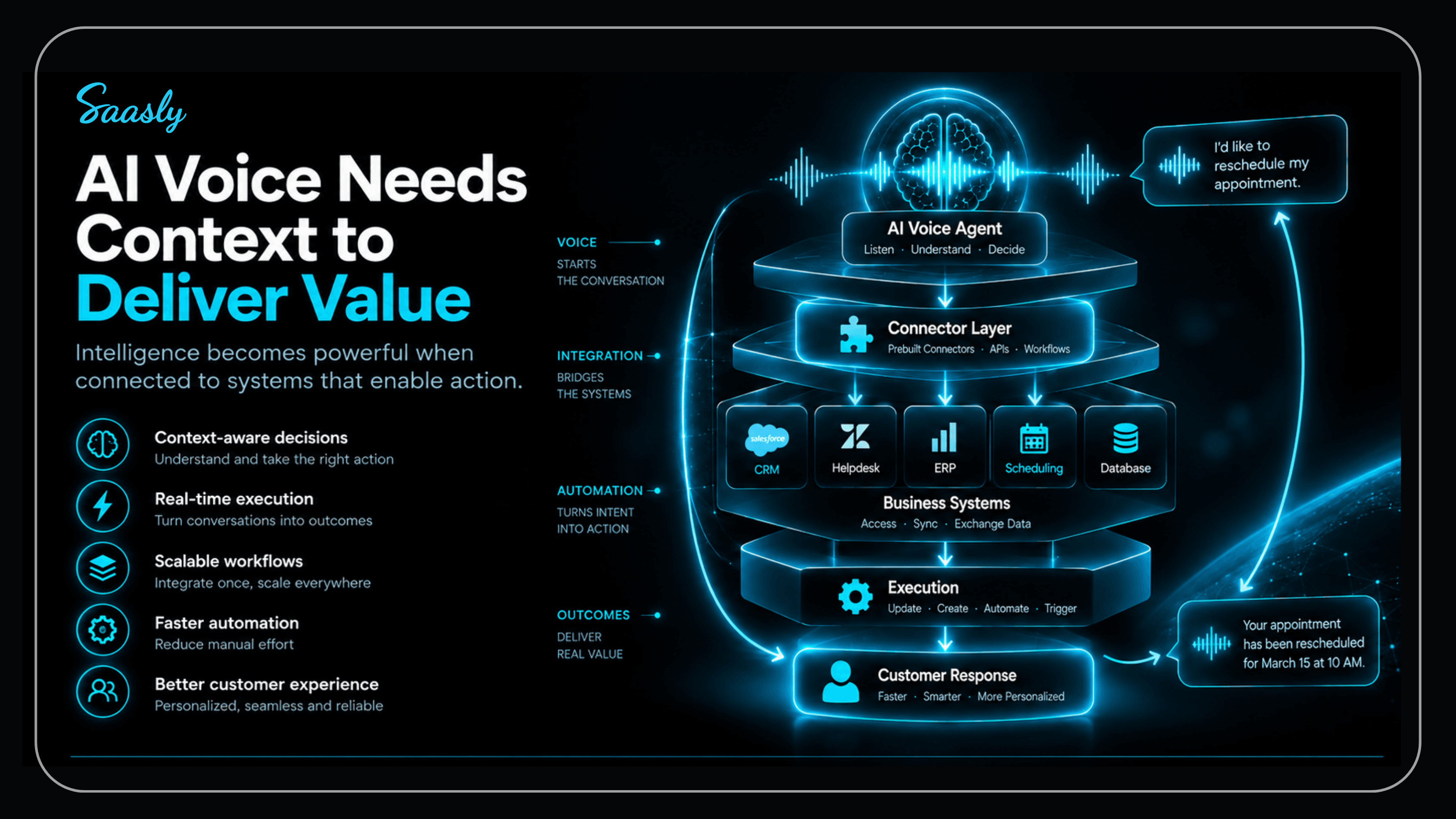
Customer → AI Voice Agent → Business System → CPaaS → Customer
The AI agent can understand what the customer is asking and determine what needs to happen next.
For example, a customer might say:
"I want to reschedule my appointment."
A traditional voice platform may connect the customer to an employee.
An AI voice agent could potentially understand the request, check available appointment information, and continue the conversation based on the available business workflow.
This represents a major shift from automating calls to automating conversations.
What Is AI Voice in CPaaS?
AI Voice CPaaS combines voice communication infrastructure with AI capabilities such as conversational AI, speech recognition, and automated responses.
Instead of relying entirely on predefined voice menus, businesses can use AI voice agents to support more natural interactions.
Common use cases include:
- Customer support
- Appointment scheduling
- Order status updates
- Customer qualification
- Lead engagement
- Delivery coordination
- Service requests
- Automated notifications
For enterprises, the value is not simply that AI can talk.
The value comes from what the AI can understand and accomplish during the conversation.
AI Voice Is More Than a Voice API
This is where the next generation of CPaaS becomes interesting.
Traditional voice automation focuses on:
Connect → Route → Complete
AI-powered voice introduces:
Listen → Understand → Decide → Act → Respond
That "act" step is critical.
An AI voice agent may understand that a customer wants to check an order, change an appointment, or request support. But understanding the request is only part of the process.
To complete the task, the AI may need access to the systems where that information exists.
This could include:
- CRM platforms
- Helpdesk systems
- ERP applications
- Scheduling systems
- E-commerce platforms
- Customer databases
- Internal business applications
This makes AI Voice Integration an increasingly important part of enterprise communication.
Why Enterprise Integrations Matter for AI Voice
Consider a simple customer interaction:
Customer: "Where is my order?"
For an AI voice agent to provide a useful answer, the conversation may need to connect with an order management or customer system.
The workflow becomes:
Customer → AI Voice Agent → Business System → Order Information → AI Response
The same principle applies to appointment scheduling.
Customer → AI Voice Agent → Scheduling System → Available Slot → Customer Confirmation
Without these integrations, an AI voice agent may be able to understand the customer but may not be able to complete the requested action.
This creates a clear distinction:
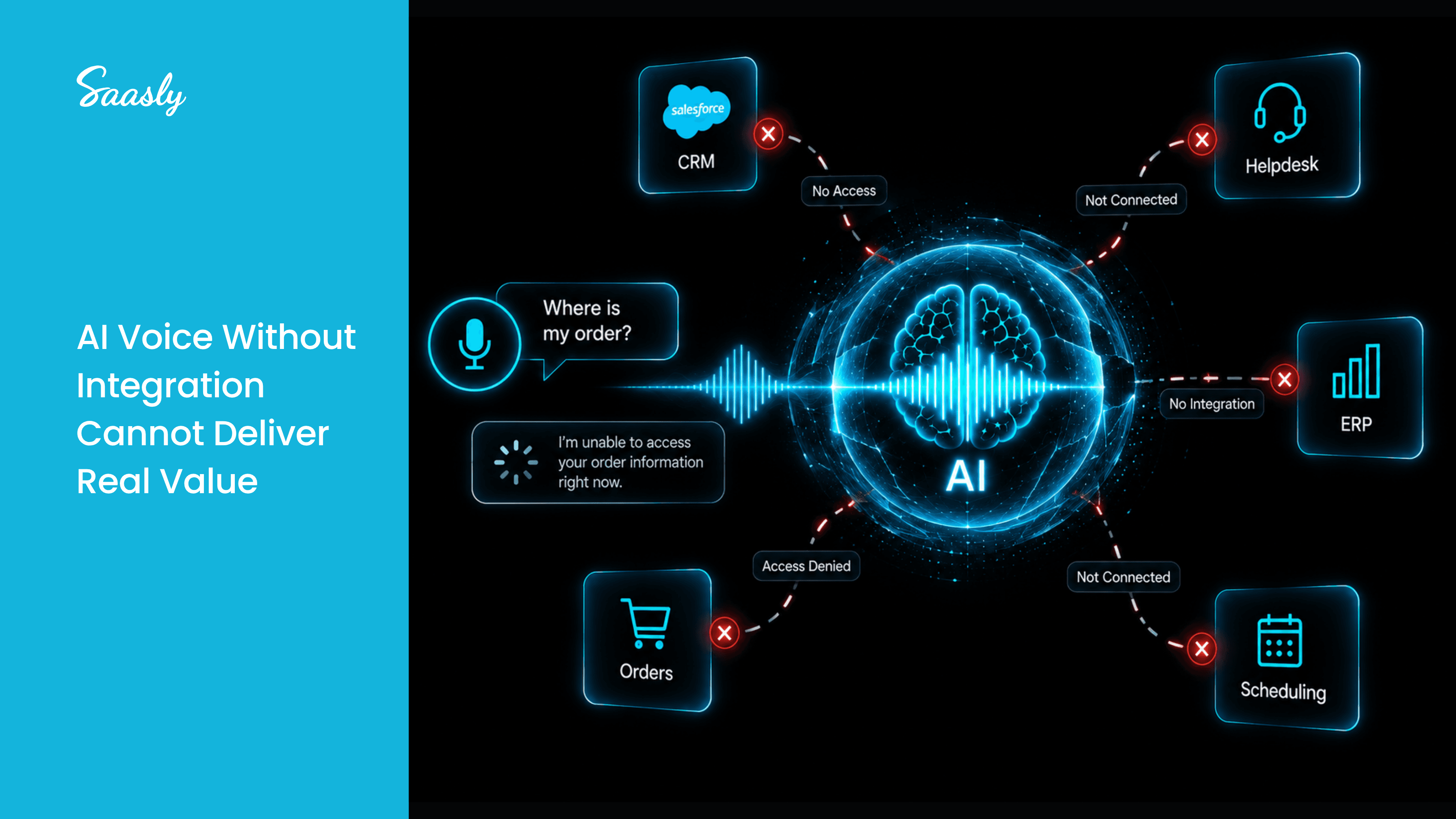
AI provides intelligence. Integrations provide context and access. CPaaS provides communication infrastructure.
The Challenge of Building AI Voice Integrations at Scale
Enterprise customers rarely use the same technology stack.
One organization may use Salesforce, another may use HubSpot, while another may rely on Zendesk, Zoho, or a custom business application.
If a CPaaS provider builds every integration from scratch, the engineering workload can quickly increase.
This can lead to:
- Longer development cycles
- Engineering backlogs
- Repetitive integration work
- Higher maintenance effort
- Slower enterprise onboarding
- Delayed AI Voice deployments
As AI Voice adoption grows, providers need an integration strategy that can scale alongside customer demand.
Why Prebuilt Connectors Matter for AI Voice
Prebuilt connectors provide reusable integration components that can help connect communication platforms with commonly used enterprise applications.
Instead of repeatedly developing similar integrations, providers can use reusable frameworks to accelerate deployment.
This can support:
- Faster enterprise onboarding
- Reduced repetitive development
- Consistent integration architecture
- Easier maintenance
- Faster deployment
- Improved engineering productivity
For AI Voice, this becomes particularly useful because the AI agent needs access to the systems that allow it to take meaningful action.
Where Saasly Lego Box Fits
As CPaaS providers expand into AI-powered communication, connecting voice capabilities with enterprise applications becomes an important part of deployment.
Saasly Lego Box supports this approach through prebuilt connectors that help communication platforms connect with CRM, helpdesk, and business applications while reducing repetitive integration development.
For example:
AI Voice → CRM → Customer Information
or
AI Voice → Helpdesk → Support Workflow
or
AI Voice → Business Application → Automated Action
The objective is to provide a reusable integration foundation that can complement the provider's existing engineering capabilities.
What the Future of AI Voice CPaaS Looks Like
The next generation of CPaaS is likely to move beyond simply providing reliable voice connectivity.
The bigger opportunity is connecting intelligent conversations with business actions.
The evolution can be summarized as:
Voice Infrastructure → Voice APIs → Conversational AI → AI Voice Agents → Intelligent Business Workflows
As AI voice agents become more capable, enterprise integrations will become increasingly important.
CPaaS providers that combine voice infrastructure, AI capabilities, and scalable integration architecture will be better positioned to support increasingly automated customer interactions.
Conclusion
AI Voice is changing what businesses can expect from CPaaS.
The opportunity is no longer limited to connecting calls or automating basic voice workflows. AI voice agents can potentially understand conversations, interact naturally, and trigger actions across business systems.
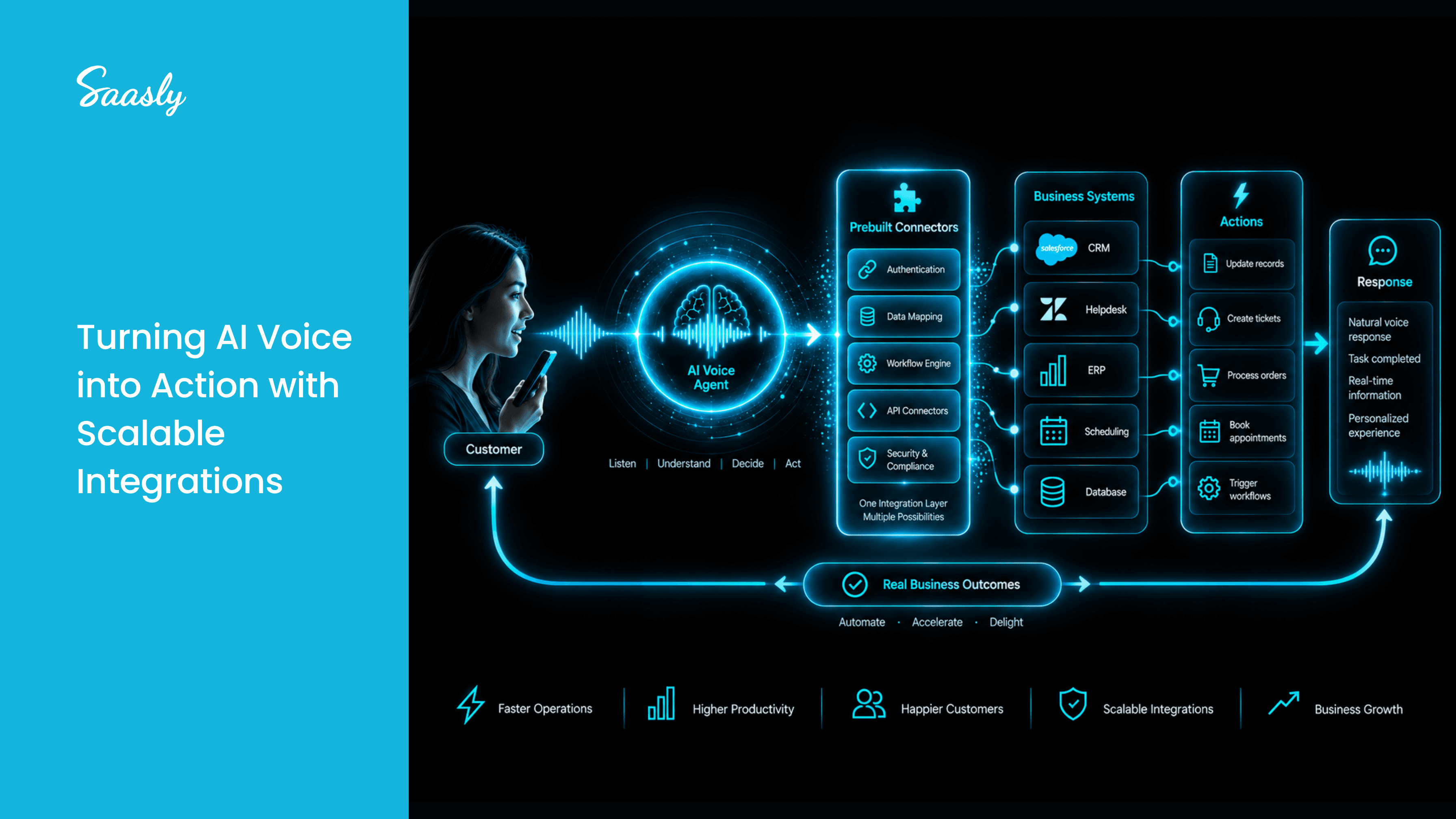
CPaaS providers that combine voice infrastructure, AI capabilities, and scalable integration architecture will be better positioned to support increasingly automated customer interactions.
But intelligent conversations need more than AI.
They need context, connectivity, and execution.
For CPaaS providers, the next competitive advantage may come from bringing these capabilities together:
AI + Voice + Enterprise Integrations = Intelligent Communication
As businesses move toward more automated customer experiences, CPaaS platforms that can connect intelligent voice interactions with the systems enterprises already use will be better prepared for the next phase of communication.