

Back
Festive Season CPaaS Strategy: Triggered WhatsApp, SMS and RCS Campaigns

Ajith
- November 5, 2026
6 min read

From Diwali to Christmas and New Year, brands compete for the same shoppers in a few crowded weeks. Ad fatigue is high, inboxes are full, and a customer who does not get a relevant offer in time simply buys elsewhere.
The brands that do well treat messaging channels as part of the sales funnel, not an afterthought. A WhatsApp message with a cart link, an SMS with a flash deal, or an RCS card with a product carousel reaches the customer on the screen they check most often, and lets them reply on the spot.
This guide walks through a festive messaging strategy in three phases: before, during and after the sale. It also covers what sits behind the scenes, because none of these campaigns work unless your CPaaS channels connect cleanly to the platform that triggers them.
Why messaging channels win in festive season
Email and push notifications compete with dozens of other alerts. Messaging channels behave differently, for four reasons:
- Direct reach. Messages land in the customer's chat list, not a promotions tab or a notification shade.
- Speed. A flash deal or low-stock alert is only useful if it is seen within minutes.
- Rich content. Images, buttons, product cards and payment links shorten the path from message to purchase.
- Two-way conversation. Customers can ask about size, delivery date or price, and get an answer in the same thread.
No single channel is enough, though. WhatsApp is strongest for conversation and rich content, SMS for reach and reliability, and RCS for branded, interactive cards on supported Android devices. The best festive setups use all three and fall back from one to the next.
Before the sale: build the audience and set up the journeys
Start three to four weeks early. The goal is a list of customers who have agreed to hear from you, and journeys ready to fire the moment the sale starts.
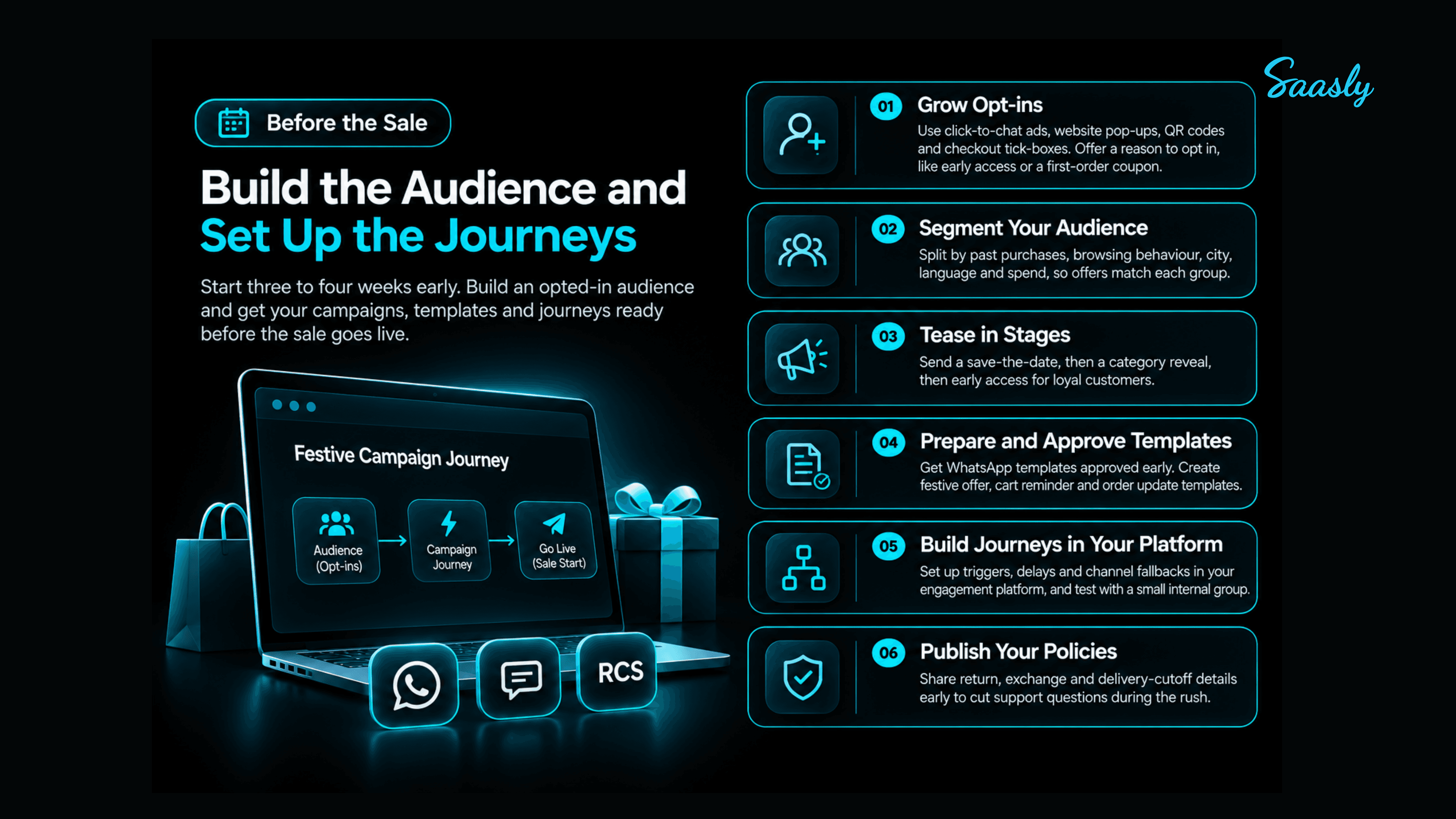
- Grow opt-ins. Use click-to-chat ads, website pop-ups, QR codes in stores and checkout tick-boxes. Offer a reason to opt in, such as early access or a first-order coupon.
- Segment your audience. Split by past purchases, browsing behaviour, city, language and spend, so offers match what each group wants.
- Tease in stages. Send a save-the-date, then a category reveal, then early access for loyal customers. Do not show every offer at once.
- Prepare and approve templates. WhatsApp templates need approval before they can be sent. Write festive offer, cart reminder and order update templates early.
- Build journeys in your engagement platform. Set up triggers, delays and channel fallbacks in the tool your marketing team already uses, and test them with a small internal group.
- Publish your policies. Send return, exchange and delivery-cutoff details up front to cut support questions during the rush.
During the sale: trigger the right message at the right moment
During the sale, timing matters more than volume. Instead of one big broadcast, trigger messages from customer behaviour, so each person gets something relevant.
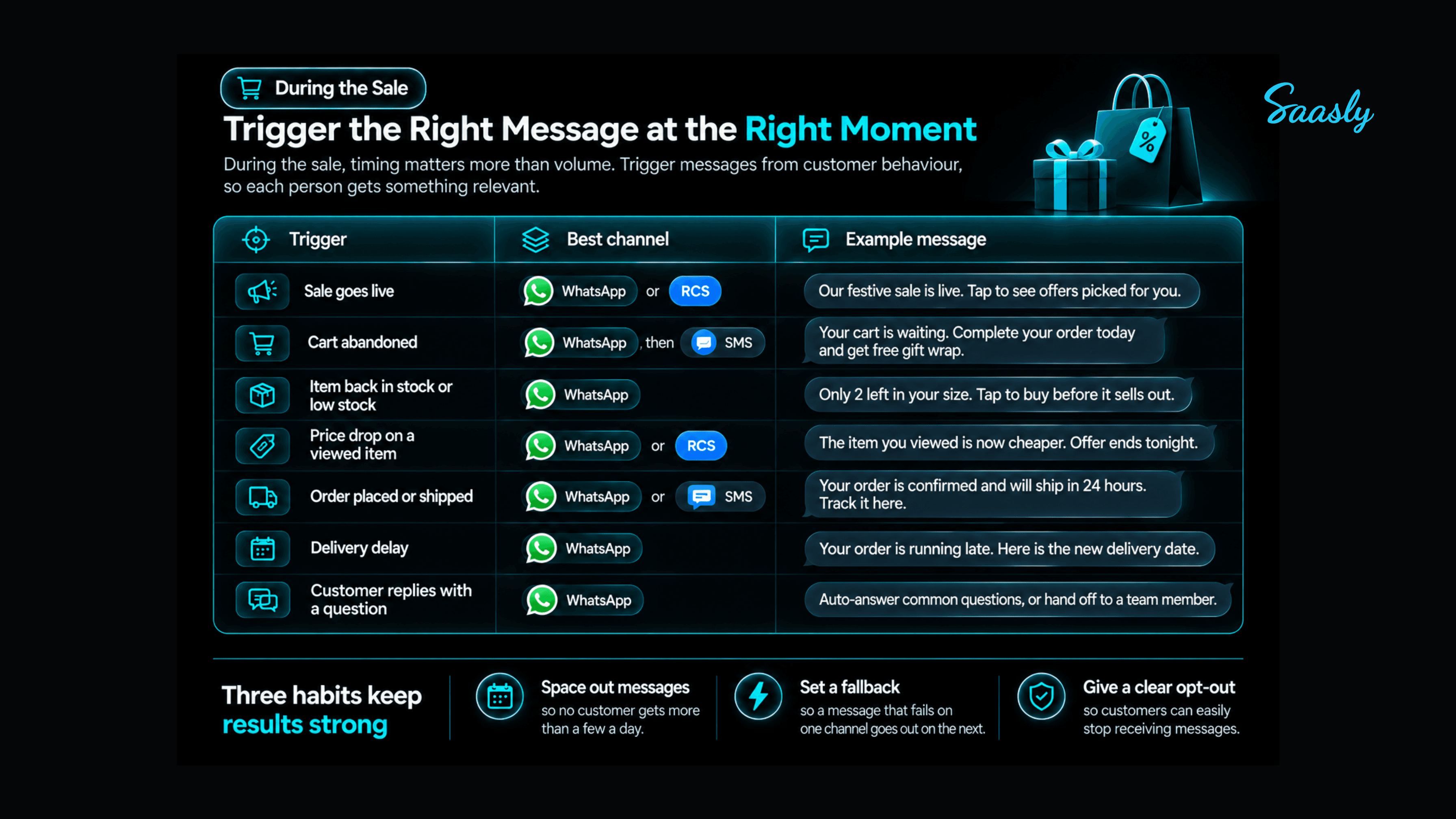
Three habits keep results strong. Space out messages so no customer gets more than a few a day. Set a fallback, so a message that fails on one channel goes out on the next. And always give customers a clear way to opt out.
After the sale: keep the customers you just won
The weeks after a sale decide whether a one-time buyer becomes a repeat customer.
- Ask for feedback. Send a one-tap rating a few days after delivery. Route unhappy replies to your team and happy ones to a review link.
- Clear leftover stock. Offer a short post-sale deal to customers who viewed or saved those items.
- Win back lapsed buyers. Target customers who browsed but did not buy with a gentle reminder or small incentive.
- Reward loyalty. Give repeat buyers early access to the next launch or a members-only offer.
- Learn and reuse. Review which offers, channels and send times worked, and carry those segments into your New Year and Christmas campaigns.
- Check channel health. Watch opt-outs, blocks and template quality ratings, and cut frequency if they rise.
What makes it work: your CPaaS channels connected to your campaign tool
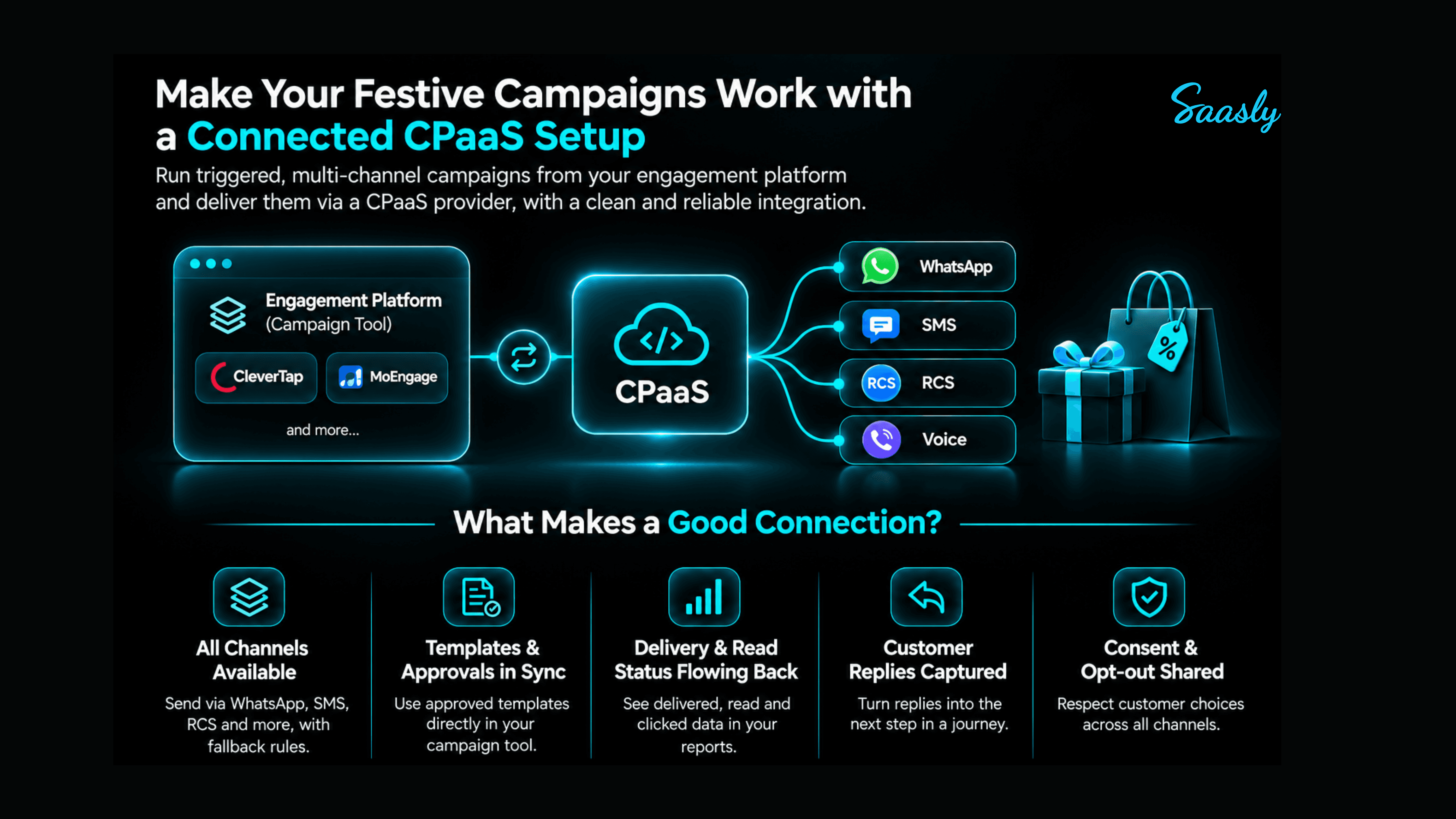
Most festive campaigns are not sent by hand. Marketing teams set up triggers and journeys in an engagement platform such as CleverTap or MoEngage, and a CPaaS provider delivers the message over WhatsApp, SMS, RCS or voice. The campaign only works if the two are connected properly.
What a good connection needs:
- Every channel available as a send option inside the campaign tool, with fallback rules between them.
- Templates and approvals in sync, so marketers pick approved templates instead of copying text between systems.
- Delivery and read status flowing back, so campaign reports show what was actually delivered, read and clicked.
- Customer replies captured, so a reply can trigger the next step in a journey instead of disappearing.
- Consent and opt-out status shared, so no one is messaged against their choice.
For CPaaS providers, this is a distribution question. The more engagement platforms your channels plug into, the more customers can start using you without a custom project. For businesses, it is an operations question: you should be able to pick the channel and provider you want, and still run everything from the tool your team knows.
Saasly works on both sides. We build integrations that connect CPaaS channels and APIs to SaaS and marketing platforms, help CPaaS companies list their services in SaaS marketplaces, and support their internal product development. For businesses using CPaaS, we automate and integrate the pieces that sit between the channel and the rest of their stack.
Plan your next festive season with Saasly
A strong festive strategy comes down to timely triggers, the right channel for each message, and clean connections between the tools that send them. Plan the integration early, test it, and the campaigns are free to do their job.
- If you are a CPaaS provider, talk to us about connecting your channels to SaaS and engagement platforms, or listing your services in SaaS marketplaces, before the next peak.
- If you use a CPaaS provider, tell us which channels and campaign tools you run. We will map what can be integrated or automated.